
Table of Contents
- Why Material Choice Matters for 3D Printed Gifts
- PLA vs PETG for 3D Printing: Strength, Durability, and Use Cases
- Flexible 3D Printing Filament for Functional Gifts
- 3D Printing Materials for Outdoor Use
- Popular 3D Printed Gift Ideas and Material Recommendations
- Safety, Suitability, and Finishing for Gift-Quality Prints
- How to Choose the Right Material for Your Gift
- Frequently Asked Questions
Last Updated: October 8, 2026
Why Material Choice Matters for 3D Printed Gifts
Picking the right filament for a functional gift determines whether it survives daily use or ends up in a drawer, which is why understanding the best 3d printing materials for functional gifts matters.
A desk organizer made from the wrong filament cracks under stress. A fidget toy printed in brittle material loses its appeal fast. Outdoor planters fail in sunlight. The best 3D printing materials for functional gifts balance durability, ease of printing, cost, and the gift's specific demands.
PLA vs PETG for 3D Printing: Strength, Durability, and Use Cases
Most people start printing gifts with PLA: it's easy to print, looks great, and costs less. But ease doesn't equal durability, and knowing when PLA works and when you need PETG separates gifts that last from gifts that disappoint.
PLA: Ease of Printing and Aesthetic Appeal
PLA is the beginner's choice: it prints at lower temperatures, needs minimal bed prep, and produces sharp detail with clean layer lines. For gifts that sit on shelves without heavy handling, it's often enough.
The catch? PLA is brittle and doesn't flex. Drop a PLA fidget toy and it can shatter; leave a PLA organizer in a warm car and it softens. PLA also absorbs moisture over time, weakening layer adhesion.
Where PLA shines: collectibles, display pieces, decorative coasters, and articulated figures that are posed but not repeatedly flexed. The Flexi Manta Ray and Mini Fidgets from our shop prove this: designed with articulation in mind, PLA creates satisfying movement without the brittleness of solid prints.
PETG: Durability and Heat Resistance
PETG is PLA's tougher sibling. It prints at higher temperatures and requires more bed prep, but the payoff is a material that flexes instead of shatters, resists heat better, and lasts years under stress.
PETG is the material for functional gifts.
The tradeoff is print time and precision. PETG needs a hotter nozzle (around 230-250°C vs. 200-220°C for PLA), takes longer to cool, and can string if settings aren't dialed in.
Cost and Print Efficiency Comparison
PLA costs roughly 15-20% less per kilogram than PETG, a few cents on a fidget toy, but it adds up on larger organizers or planters.
Print time favors PLA: a fidget toy prints 10-15% faster than in PETG thanks to lower temperatures and faster cooling. Printing multiple gifts on a deadline? PLA saves time.
But efficiency also means success rate. PETG fails less on functional prints because it doesn't snap mid-print or crack during bed removal. One successful PETG print beats three failed PLA attempts.
| Material | Printing Difficulty | Heat Resistance | Durability | Best For |
|---|---|---|---|---|
| PLA | Easy | Low | Brittle | Display items, collectibles |
| PETG | Moderate | Moderate-High | Flexible, tough | Functional gifts, daily use |
Flexible 3D Printing Filament for Functional Gifts
Some gifts need to move. Fidget toys, articulated figures, and flexible organizer clips rely on filament that bends without breaking. Rigid materials like standard PLA fail here; flexible filament is a different category entirely.
When Flexibility Matters in Gift Design
The SquishSpin fidget spinner from Bandit's Print Den demonstrates this. Its textured surface and smooth spin depend on material that compresses and returns to shape; rigid filament would crack at the joints.
Flexibility also matters for impact. A dropped fidget toy in flexible material bounces; the same toy in PLA shatters. For kids or people rough on their belongings, flexibility is insurance against disappointment.
Printability and Performance Trade-offs
Flexible filament is harder to print than PLA or PETG. It clogs nozzles, strings badly, and requires slower speeds. Many printers struggle with it.
Flexible prints also take longer: a fidget toy that prints in 3 hours in PLA might take 5-6 hours in flexible filament, and rushing it produces weak, stringy results.
The real tradeoff is cost. Flexible filament runs 40-60% more than PLA per kilogram. For a $5 fidget toy that's meaningful; for larger gifts it can double material cost.
3D Printing Materials for Outdoor Use
Gifts that live outside face sun, rain, and temperature swings, and most 3D-printed materials degrade quickly. The right outdoor material keeps your gift looking good for years.
UV Resistance and Weather Durability
PLA breaks down in sunlight. UV rays weaken the polymer chains, causing brittleness and discoloration. A PLA planter that looks sharp indoors yellows and cracks within months outdoors.
ASA (acrylonitrile styrene acrylate) is built for outdoor use. It resists UV damage far better than PLA or PETG, holds color longer, and doesn't become brittle in sunlight.
PETG is a middle ground: not designed for outdoor use like ASA, but it holds up better than PLA. A PETG planter lasts 2-3 years outdoors before visible degradation; PLA might last 6-12 months.
Best Materials for Planters, Coasters, and Outdoor Accessories
Planters are the most common outdoor gift, facing constant UV, moisture, and temperature changes. PLA planters will fail; PETG is acceptable for covered patios; ASA is right for direct sun.
Coasters like the Star Trek Themed Starfleet Coasters work well in PLA indoors but degrade outdoors, so PETG or ASA is necessary outside.

Garden markers, plant labels, and outdoor clips all benefit from ASA or PETG. PLA outdoor accessories are novelties: good in photos, but they won't survive a season.
Popular 3D Printed Gift Ideas and Material Recommendations
The best gift is one the recipient actually uses. That means matching material to purpose. Here's what works for the most popular 3D-printed gifts.
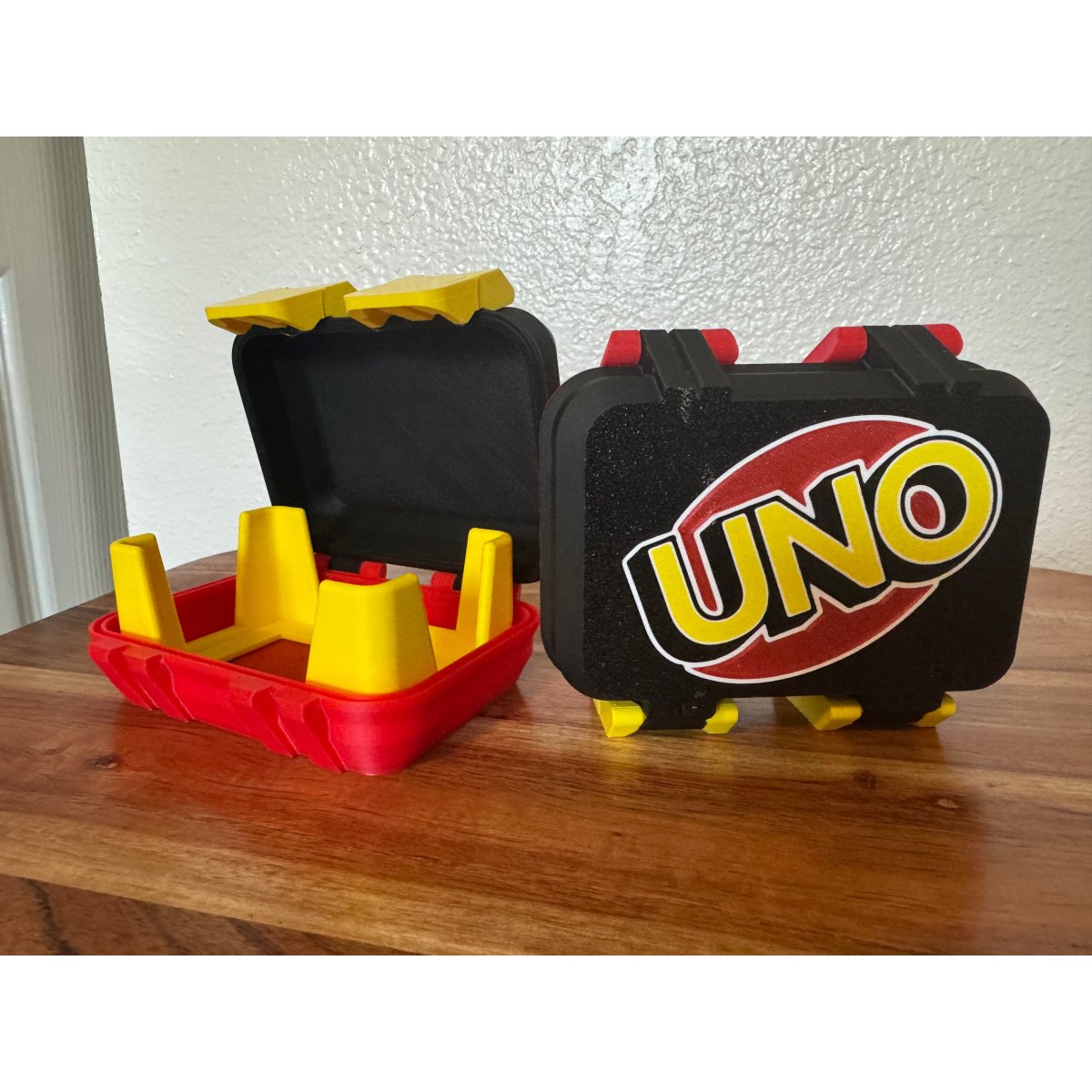
Desk Accessories and Organization
Desk organizers, cable clips, and pen holders are handled daily and need durability.

The Card Game Case & Playing Card Holder from Bandit's Print Den is printed in PLA, which works because it's handled gently and stored between uses.
Cable management clips especially benefit from PETG. They flex to grip cables without damaging them, and they stay functional after hundreds of adjustments.
Cost matters for desk accessories since people often want multiple pieces. PLA's lower cost makes sense for decorative gifts; for functional ones, PETG's durability justifies the extra expense.
Fidget Toys and Sensory Gifts
Fidget toys are squeezed, bent, twisted, and dropped constantly, so rigid materials fail. Flexible filament or articulated designs in tougher materials are essential.
The Infinity Cube Fidget and SquishSpin are designed to take abuse.
For sensory gifts, texture matters as much as durability. SquishSpin's textured surface provides tactile input, and rough PLA layer lines actually add to the sensory experience.
NFC Tap to Connect Display Set (4-Module System) | Social Media & Payment Links →
Fidget toys in flexible filament are premium gifts: they cost more but last longer and feel better in hand. For daily use, the extra cost is worthwhile.
Collectibles and Articulated Figures
Collectibles live on shelves, posed and displayed rather than heavily handled. PLA is perfect here: sharp detail, clean appearance, and lower cost for items that sit still.
Articulated figures like Bandit's Buddies benefit from PLA's ability to hold detail while allowing joint movement.
Collectibles also benefit from post-processing.
The adoption kit format, with the printed dog, profile card, and certificate, adds perceived value, and PLA's aesthetic appeal makes the collectible feel special.
Safety, Suitability, and Finishing for Gift-Quality Prints
A gift that looks rough won't feel special. Finishing matters. So does safety, especially for gifts that contact skin or food.
Food Safety and Contact Considerations
Most 3D-printed materials are not food-safe. PLA, PETG, and flexible filament all contain compounds that can leach into food or beverages, so know the limits if your gift will hold food or drink.
PLA is generally considered safer than PETG for food contact, but neither is truly food-grade without special post-processing.
For fidget toys and sensory gifts that go in mouths, especially for kids, material safety is critical.
Surface Finish and Post-Processing for Presentation
Layer lines are the enemy of gift presentation. A print with visible horizontal lines looks cheap, even if it's well-designed. Finishing fixes this.
Sanding is the standard approach: start with 120-grit and work up to 400-grit for a smooth finish.
Vapor smoothing works for PLA and PETG.
Paint covers layer lines and adds personality. A plain white fidget toy becomes special when painted.
The best approach depends on the gift.
How to Choose the Right Material for Your Gift
Material selection comes down to three questions: How will the gift be used? What environment will it live in? What's your budget?
Performance Criteria and Trade-offs
Durability under stress. For gifts handled daily, flexed, or dropped, you need PETG or flexible filament. PLA fails under these conditions.
UV resistance. Outdoor gifts need ASA or PETG. PLA degrades in sunlight within months.
Printability. PLA is easiest. PETG requires more skill. Flexible filament demands printer compatibility and patience.
Cost. PLA is cheapest. PETG costs 15-20% more. Flexible filament and ASA add 40-70% to material costs.
Aesthetics. PLA holds detail sharply. PETG prints are slightly rougher. Flexible prints often show layer lines unless finished.
Material-by-Material Guidance for Common Gift Types
Desk organizers and cable clips: PETG, for flex and daily handling.
Collectible figures and articulated toys: PLA, since detail matters and articulation accounts for material limits.
Fidget toys and sensory gifts: Flexible filament or articulated PLA designs; standard rigid materials fail.
Decorative coasters and display items: PLA indoors, PETG or ASA outdoors.
Gifts for small children: PLA in designs that won't be chewed.
Gifts that contact food: PLA is safer than PETG, but neither is truly food-safe without additional coating.
The material choice is a commitment to the gift's future.
Choosing the right 3D printing material for functional gifts comes down to matching material properties to how the gift will actually be used. Our Custom NFC Social Media Vendor Keychain ($8.00) and Flexi Manta Ray ($10.00) showcase how material choice creates gifts that recipients actually love and use.

Frequently Asked Questions
Which 3D printing material is best for functional gifts?
PLA works well for decorative gifts and items that don't face stress, while PETG is better for functional gifts that need durability and heat resistance. For gifts that require flexibility, TPU or TPE filaments provide the necessary give without breaking. Choose based on how the gift will be used: PLA for desk accessories and collectibles, and flexible filament for fidget toys or cable management.
Is PLA strong enough for useful 3D printed gifts?
PLA is adequate for many functional gifts like desk organizers, card holders, and display pieces, but it has limitations. It's brittle under stress, softens at around 60°C, and degrades in sunlight. PLA excels for low-stress items like the Card Game Case or Star Trek coasters from Bandit's Print Den.
When should I use PETG instead of PLA for a 3D printed gift?
Choose PETG when your gift needs impact resistance, heat tolerance above 70°C, or outdoor durability. PETG is ideal for functional items like cable organizers, tool holders, and outdoor planters. It's more challenging to print than PLA and requires higher temperatures, but the result is a tougher, more flexible gift that resists warping. If the recipient will use the gift actively rather than display it, PETG is the better choice.
What 3D printing material is best for flexible gifts?
TPU (thermoplastic polyurethane) and TPE (thermoplastic elastomer) filaments create flexible, durable prints ideal for fidget toys, cable clips, and articulated figures. These materials maintain their shape while allowing movement and bending. The Flexi Manta Ray from Bandit's Print Den demonstrates how flexible filament creates satisfying tactile experiences. Flexible materials print slower and require careful settings, but the result is a gift that feels premium and performs well.
Can I legally sell 3D printed gifts?
Yes, you can sell 3D-printed items you've designed or licensed. However, printing and selling designs you don't own rights to violates intellectual property law. Use original designs, purchase commercial licenses, or buy designs explicitly marked for commercial use. Bandit's Print Den operates legally by creating original work and licensing designs properly, as noted on their Mini Fidgets product page.
0 comments