
Table of Contents
- What Are Custom Articulated 3D Figures?
- Best Materials for Articulated 3D Prints
- 3D Printing Quality Control Standards That Matter
- How to Commission a Custom Articulated Figure
- 3D Printed Fidget Toys for Stress Relief and Desk Engagement
- DIY vs. Professional Commission Services
- Painting, Assembly, and Post-Processing Workflow
- Legal and Copyright Considerations
Last Updated: August 25, 2026
What Are Custom Articulated 3D Figures?
Custom articulated 3D figures are moveable collectibles created through digital sculpting and 3D printing technology. These fully poseable companions feature joints, hinges, and ball-socket connections that let you bend, twist, and arrange them in countless positions. At Bandit's Print Den, we specialize in bringing these designs to life with meticulous attention to detail and durability.
The appeal is straightforward: you get something completely unique that reflects your personality or interests. Whether it's a dinosaur with a rotating head and flexible spine, an axolotl dragon, or an adoption-ready dog buddy, each figure is engineered for movement and display. The articulation transforms a static collectible into something interactive and genuinely fun to fidget with.

What makes custom figures different from mass-produced alternatives is the level of personalization. You work with a maker who understands your vision and translates it into a tangible, poseable object. The process involves reference images, design specifications, material selection, and careful post-processing to ensure your figure arrives ready to display or play with immediately.
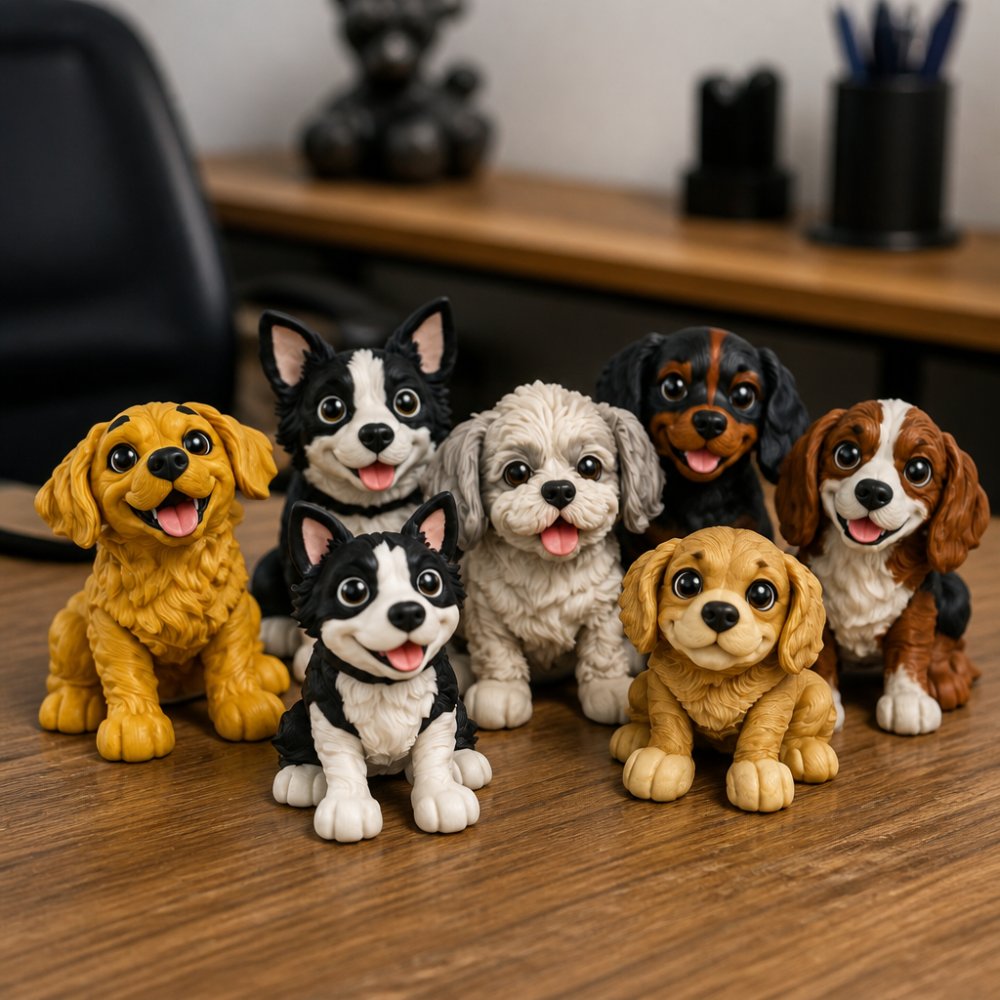
These figures serve multiple purposes. Collectors use them as display pieces for gaming or pop culture franchises. Office workers keep them as desk buddies that provide tactile engagement during the workday. Gift-givers commission custom figures as thoughtful, one-of-a-kind presents. Parents order whimsical characters for children. The common thread: everyone wants something that feels premium, personal, and genuinely well-made.
Best Materials for Articulated 3D Prints
The material you choose determines how your figure feels, lasts, and moves. Three materials dominate the market: resin, PLA, and ABS.
Resin vs. PLA vs. ABS: Durability and Joint Wear Analysis
Resin produces the highest-quality finish with incredible detail and a smooth, ceramic-like surface. It captures fine features that other materials struggle with. The downside: resin is brittle. Hard falls or aggressive bending can crack joints. Resin works best for display-focused figures that won't see constant handling.
PLA is the most popular choice for articulated figures because it balances quality, durability, and affordability (peer-reviewed research). This biodegradable thermoplastic prints cleanly and produces strong joints. PLA figures handle repeated posing without degradation; the material flexes rather than shatters (peer-reviewed research). PLA is ideal if you want something you can actually play with and pose without worrying about breaking it.
ABS is tougher than PLA and offers superior impact resistance, making it the best choice for heavy handling or rough play. ABS joints wear more slowly under repeated stress. The trade-off is that ABS is harder to print cleanly and requires more post-processing work to look polished. ABS shines when durability matters more than pristine aesthetics.
For custom articulated 3D figures designed to be posed and handled regularly, PLA typically wins. It provides the sweet spot between print quality, joint longevity, and cost. Resin figures demand careful handling but deliver unmatched visual detail. ABS figures are the workhorses for heavy use.
3D Printing Quality Control Standards That Matter
Quality control separates premium custom figures from disappointing prints.
Layer adhesion is the foundation. Poor layer bonding creates weak points where the figure fails under stress. Quality makers print at optimal temperatures and speeds to ensure each layer fuses properly with the one below. You'll feel this when you pose the figure: smooth, confident movement versus hesitation or creaking.
Surface finish matters for both aesthetics and function. Visible layer lines create stress concentrations at joints. A maker who invests time in post-processing smooths these lines, strengthens the material, and dramatically improves longevity. Figures from Bandit's Print Den arrive ready to display because we prioritize finish work that extends joint life and enhances visual appeal.
Dimensional accuracy ensures joints fit together properly. If a ball joint is printed even slightly oversized or undersized, it won't articulate smoothly. Quality makers verify dimensions at each stage and adjust printing parameters to maintain tolerances.
Support structure removal requires skill and care. Rushed removal leaves scars and weak points; meticulous removal leaves no trace.
How to Commission a Custom Articulated Figure
Commissioning a custom figure is more straightforward than many people expect.
Start by identifying what you want. Be specific. Instead of "a dragon," think "a dragon inspired by this character, approximately 24 inches long, with a flexible spine and rotating head." Specificity helps makers understand your vision and quote accurately. Browse existing work from makers you're considering to gauge their style and quality level.
Reach out with your concept and reference materials. Most makers request initial contact through their website or shop. Explain your idea, share images or descriptions, and ask about availability and timeline. This is your chance to gauge whether the maker understands your vision and whether their communication style works for you.
Providing Reference Images and Design Details
Reference images are invaluable. Gather 3-5 images that show the character, style, or aesthetic you want. Include images from different angles if possible. Close-ups of details you care about help the maker nail specifics.
Design details should cover dimensions, articulation points, and material preferences. Specify approximate size so the maker can scale appropriately. Identify which joints matter most: rotating head, flexible spine, poseable limbs, or all of the above? Be clear about what you'll use the figure for, as display figures and play figures have different engineering requirements.
Material choice comes next. If you have no preference, ask the maker to recommend based on your intended use. Budget constraints matter here; resin typically costs more than PLA.
File Formats and Print-Ready Specifications
If you're providing your own 3D model file, it must be print-ready. The maker will likely need the file in STL or OBJ format, the industry standards for 3D printing. Print-ready means the model has no holes or gaps in the mesh, no internal geometry, proper wall thickness (typically 1-2mm minimum for articulated figures), and manifold geometry (peer-reviewed research).
Wall thickness is critical for articulated figures. Too thin and joints break; too thick and the figure becomes heavy and clumsy. Experienced makers know the sweet spot for each material and joint type.
3D Printed Fidget Toys for Stress Relief and Desk Engagement
The fidget appeal of articulated figures is real. There's something deeply satisfying about manipulating a well-designed, smoothly articulated object. The tactile feedback, the subtle resistance of a joint, and the satisfying snap when you rotate a ball socket back to center engages your hands and occupies your mind productively.
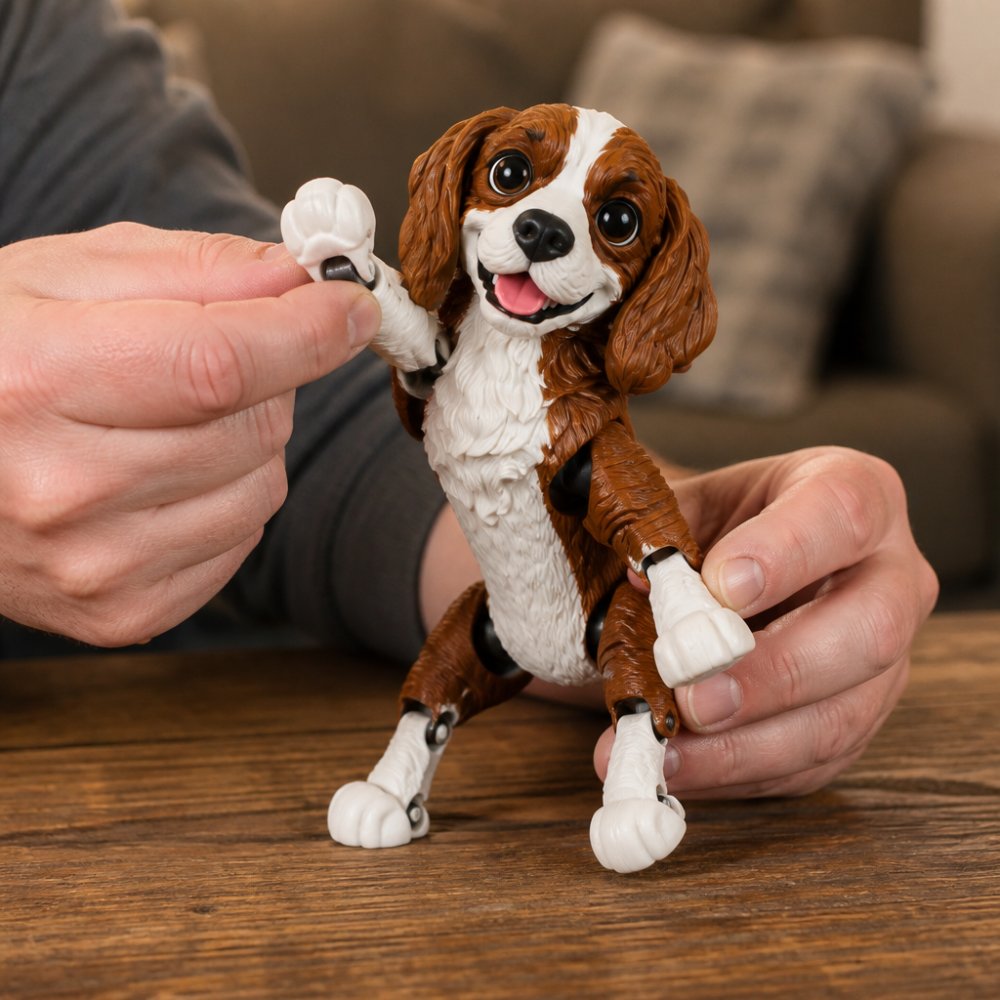
Office workers especially benefit from having a fidget figure on their desk. During video calls, while thinking through a problem, or during moments of stress, manipulating the figure provides a physical outlet. Unlike passive stress relief, the articulation demands engagement.
The best fidget figures are compact enough to fit in a hand but complex enough to offer sustained engagement. A figure with multiple articulation points, rotating head, flexible spine, poseable limbs, rotating joints at shoulders and hips, provides endless micro-movements and repositioning.
Materials matter for fidget use. PLA is ideal because it's durable under repeated stress and produces smooth joints that don't stick or bind. Resin can work if handled gently, but aggressive fidgeting risks cracking joints. The smoothness of the joint surface impacts the fidget experience; rough or sticky joints are frustrating rather than satisfying.
DIY vs. Professional Commission Services
The choice between DIY and professional commission hinges on your skills, time, and budget.
DIY printing requires owning or accessing a 3D printer, learning design software or sourcing existing models, and handling all post-processing yourself. If you already own a printer and enjoy the technical side, DIY makes sense. The downside is significant: learning curve, failed prints, time investment, and the reality that your first attempts won't match professional quality.
Professional commission services handle everything. You provide vision and reference materials; the maker handles design, printing, post-processing, and shipping. The cost is higher than DIY materials, but you're paying for expertise, equipment, time, and the guarantee of a quality result. Professional makers have invested in high-end printers, fine-tuned settings, and post-processing techniques that produce results far beyond what most hobbyists achieve.
The real difference emerges in joint quality and visual finish. Professional figures have smooth articulation right out of the box. If you want a figure that's immediately satisfying to pose and display, professional commission is worth the investment.
Bandit's Print Den offers professional commission services with personalized attention. We handle the technical complexity so you get a figure that exceeds expectations. Our quality-control process ensures smooth joints and pristine finish, with fast shipping so your figure arrives quickly.
Painting, Assembly, and Post-Processing Workflow
Once your figure is printed, post-processing determines whether it looks like a rough prototype or a premium collectible.
Sanding is the first step. Starting with coarse-grit sandpaper (80-120 grit), you remove support marks and layer lines. Progress through medium grits (220-320) to refine the surface, then finish with fine grits (400-600+) for smoothness.
Priming comes next. A thin coat of primer fills micro-imperfections and provides a uniform surface for paint. Use primers designed for plastic. Multiple thin coats beat one thick coat.
Painting brings your figure to life. Acrylic paints work well on primed plastic. Use thin coats and multiple passes. Dry-brushing highlights details and adds depth. Washes create shadow and dimension.
Assembly involves connecting articulated parts if they printed separately. Use appropriate adhesives: super glue for small parts, plastic cement for PLA, epoxy for complex joints.
Final sealing protects your work. A clear matte or gloss coat prevents paint chipping and provides water resistance.
Many people outsource post-processing to professionals. Bandit's Print Den offers finished figures, printed, sanded, primed, painted, and sealed, ready to display or play with immediately.
Legal and Copyright Considerations
Commissioning custom figures raises legitimate copyright questions.
Creating a figure based on an existing character exists in a legal gray area. The maker isn't selling the intellectual property; they're creating a custom physical object for personal use. Fan creations have some legal protection under fair use, particularly if the figure is for personal collection rather than resale.
However, the safer approach is commissioning original designs or licensed characters. Before commissioning a figure of a specific character, confirm with the maker that they're comfortable with the copyright implications. Reputable makers understand the boundaries and will advise you.
If you're commissioning a figure of yourself, a friend, a pet, or an original character, copyright isn't a concern. The figure is your property.
Resale considerations matter if you ever want to sell your figure. A custom figure of an original character is yours to resell. A custom figure of a copyrighted character exists in legal limbo; resale could technically violate intellectual property rights, though enforcement is rare for individual items. If resale is a consideration, discuss this with the maker and consider original designs instead.
Commissioning a custom articulated figure is an investment in something genuinely unique. The process is accessible, the results are rewarding, and the satisfaction of owning a personalized, high-quality collectible justifies the effort. Whether you're seeking a desk buddy, a display piece, or a tactile fidget object, custom figures deliver personality and craftsmanship that mass-produced alternatives can't match. Bandit's Print Den specializes in exactly this, translating your vision into articulated, beautifully finished figures with meticulous attention to detail. Explore our collection of Bandit's Buddies, from fully articulated reptiles to massive dinosaurs, and discover how custom articulated 3D figures can transform your space with free shipping on orders over $35.


Frequently Asked Questions
Where can I buy custom articulated 3D figures online?
You can commission custom articulated 3D figures from specialized services that offer design consultation and 3D printing. Look for providers who showcase their quality control processes, offer material options (resin, PLA, ABS), and provide examples of previous work. Many operate through their own websites or online platforms, allowing you to describe your vision, provide reference images, and receive a quote before production begins.
What makes a high-quality custom articulated 3D figure?
Quality articulated figures feature smooth joints that move without grinding, precise sculpting with minimal layer lines, and durable materials chosen for the intended use. Look for providers who follow 3D printing quality control standards, offer finishing options like painting and post-processing, and provide detailed photos of finished work. The best services also offer customization, allowing you to specify scale, color schemes, and specific design elements that matter to you.
Are 3D printed fidget toys for stress actually durable for daily handling?
Yes, when made with the right materials and proper articulation design. Resin and high-quality PLA prints are more durable than lower-grade plastics. Durability depends on joint design, ball-joints and swivel hinges distribute stress better than simple pin joints. If you plan to handle your figure daily, ask the provider about their joint wear analysis and material recommendations. Figures designed specifically as fidget toys typically feature reinforced articulation points built to withstand repeated movement.
How long does it take to get a custom articulated 3D figure delivered?
Turnaround times vary by provider and complexity. Basic designs may take 1-2 weeks from order to delivery, while complex custom commissions can take 3-4 weeks or longer. Many providers offer expedited options for rush orders. Factors affecting speed include design complexity, post-processing (painting, assembly), and current order volume. Always confirm the estimated delivery date before placing your order, especially if you need the figure by a specific milestone or gift deadline.
This article was written using GrandRanker
0 comments