
Table of Contents
- How Tactile Sensory Toys Reduce Anxiety
- The Science Behind Sensory Regulation and Nervous System Calming
- 3D Printed Fidget Toys for Stress Relief
- Benefits of Print-in-Place Fidgets for Sensory Engagement
- Discreet Sensory Tools for Professional and Academic Settings
- Maintenance and Hygiene for Long-Term Sensory Tool Use
- Choosing the Right Tactile Tool for Your Needs
- Frequently Asked Questions
Last Updated: September 30, 2026
How Tactile Sensory Toys Reduce Anxiety
Tactile sensory toys anxiety tools work by giving your hands something meaningful to do while your nervous system recalibrates. When anxiety spikes, your body floods with cortisol and adrenaline. Repetitive tactile input, spinning, folding, squishing, clicking, interrupts that cascade by anchoring your attention to physical sensation instead of anxious thoughts.
The mechanism is straightforward: your brain can't simultaneously process threat signals and focused tactile input with equal intensity. One wins. When you engage a fidget toy, the sensory data traveling up your fingers competes for neural bandwidth with the anxiety signal. The result is a measurable drop in nervous system activation.
This isn't distraction in the shallow sense. It's sensory regulation, a genuine neurological shift that calms the amygdala and activates your parasympathetic nervous system. People with anxiety, ADHD, autism spectrum traits, and general stress all report the same outcome: fidgeting with the right tool creates a window of calm that lets you think clearly again.
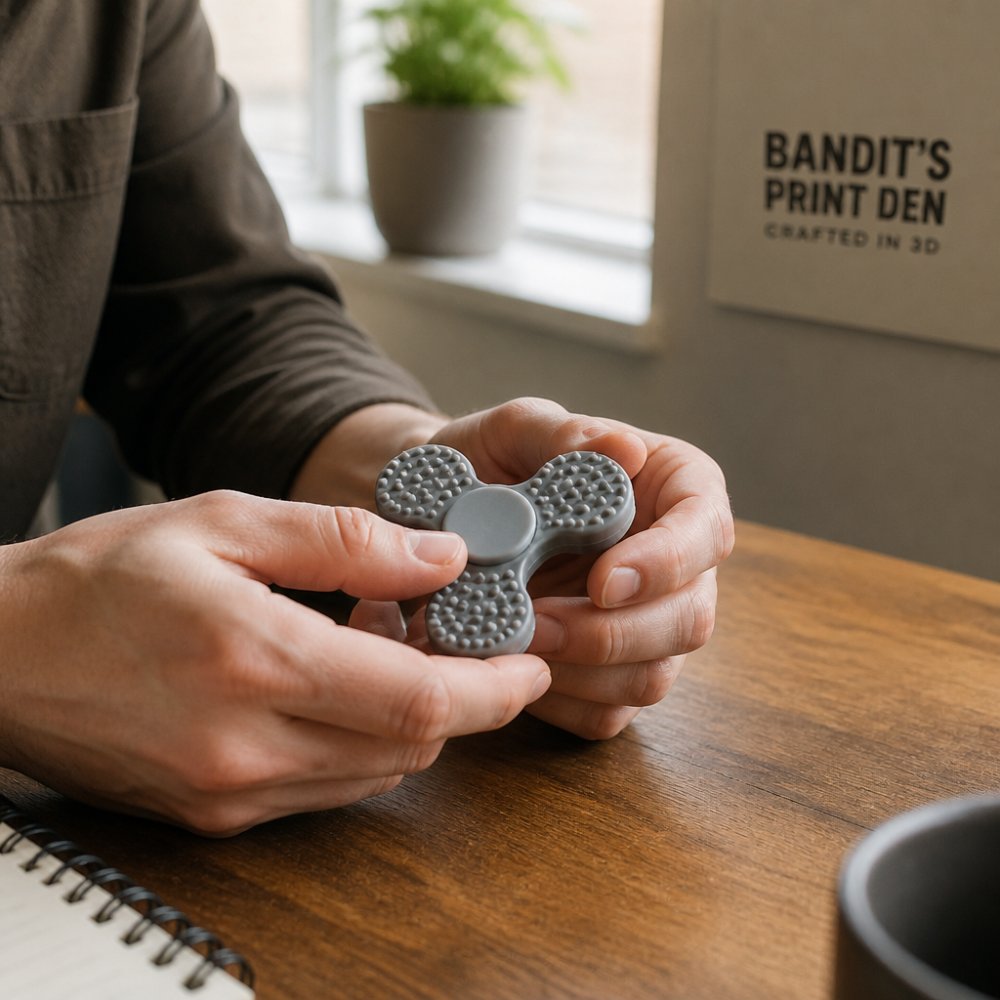
At Bandit's Print Den, we've designed tactile toys specifically for this purpose. The SquishSpin 2" Textured Sensory Fidget Spinner combines smooth ball-bearing rotation with a textured surface that delivers dual sensory input, proprioceptive feedback from the spin and tactile stimulation from the surface. For people seeking something simpler, the Infinity Cube Fidget Toy offers endless folding motion in a pocket-sized form that works anywhere: your desk, a waiting room, a stressful meeting.

The key is matching the toy to your sensory preference. Some people need smooth, rhythmic motion. Others need texture and resistance. The right match creates genuine anxiety relief within seconds.
The Science Behind Sensory Regulation and Nervous System Calming
Your nervous system has two primary modes: sympathetic (fight-or-flight) and parasympathetic (rest-and-digest). Anxiety locks you in sympathetic mode. Sensory regulation tools shift you back toward parasympathetic activation by providing grounding input that your brain perceives as safe.
When you manipulate a tactile toy, pressure sensors in your hands send signals up the spinothalamic tract to your brain. This proprioceptive input activates the vagus nerve, which controls parasympathetic activation. The result: your heart rate drops, your breathing deepens, and your nervous system downshifts from high alert to manageable baseline.
Research in sensory integration shows that repetitive tactile motion is particularly effective because it's predictable. Predictability signals safety to your amygdala. Unlike unpredictable stressors, a fidget toy delivers the same sensory stimulus every time you use it, your brain learns to trust it and relax in its presence.
The texture matters too. Smooth surfaces activate different nerve endings than ridged or bumpy ones. A textured fidget engages more sensory receptors, creating richer proprioceptive feedback. This is why the SquishSpin's combination of smooth spin and textured surface works: you get dual-channel sensory input that more thoroughly occupies your attention.
How Different Neurodivergent Profiles Respond to Tactile Tools
While the basic mechanism is universal, the type of sensory input that works best varies significantly by neurotype:
ADHD and Fidget Toys: People with ADHD benefit most from toys that provide novelty and variable sensory feedback. The repetitive motion must be engaging enough to compete with the ADHD brain's constant search for stimulation. Spinners with ball bearings, infinity cubes with multiple folding sequences, and textured fidgets that offer different sensations as you manipulate them work well because they provide enough complexity to hold attention. A simple smooth fidget often fails for ADHD users because the brain habituates to it too quickly. The goal is sustained engagement, not just calming.
Autism Spectrum and Sensory Regulation: Autistic individuals often use fidgets for predictability and sensory consistency rather than distraction. The repetitive motion itself is regulating, the sameness is the point. Many autistic people prefer toys with a single, reliable motion pattern (like a spinner that spins smoothly without wobble, or a cube that folds in the same way every time). Texture is important, but consistency matters more than novelty. A fidget that behaves unpredictably or has variable resistance can be dysregulating rather than calming.
Highly Sensitive Persons (HSP) and Sensory Overload: People with high sensory processing sensitivity need fidgets that are gentle and non-overwhelming. They often prefer smooth, soft textures over rough ones, and quiet mechanisms over clicking or whirring sounds. The goal is to provide grounding without adding sensory noise. A fidget that's too textured, too loud, or too stimulating can trigger sensory overload rather than relief. HSPs benefit from fidgets they can use in low-stimulation environments and that don't compete with other sensory input.
General Anxiety and Stress: For people without neurodivergence who experience situational anxiety, fidgets work primarily as attention anchors. The sensory input interrupts the anxiety spiral by giving the brain something concrete to focus on. These users are often flexible about toy type, smooth, textured, simple, or complex all work as long as the fidget is engaging enough to redirect attention.
The texture matters too. Smooth surfaces activate different nerve endings than ridged or bumpy ones. A textured fidget engages more sensory receptors, creating richer proprioceptive feedback. This is why the SquishSpin's combination of smooth spin and textured surface works: you get dual-channel sensory input that more thoroughly occupies your attention.
Infinity Cube Fidget Toy | 3D Printed →
Choosing Based on Your Profile: If you have ADHD, prioritize fidgets with multiple sensations and variable feedback. If you're autistic, choose toys with predictable, consistent motion. If you're highly sensitive, opt for gentle, quiet options. If you experience general anxiety, match your preference for either simple repetition or complex engagement. This distinction is critical: a toy that works beautifully for one neurotype can be ineffective or even dysregulating for another.
3D Printed Fidget Toys for Stress Relief
3D-printed fidget toys offer precision and durability that mass-produced alternatives often lack. When a toy is printed layer by layer, the designer controls every detail: bearing fit, surface texture, articulation points, and weight distribution. This precision means the toy performs exactly as intended, delivering consistent sensory input without the wobble or wear of cheaper alternatives.
PLA plastic, the material used in quality 3D-printed fidgets, is durable enough for daily use while remaining lightweight and comfortable to hold. It doesn't degrade quickly like some soft plastics, and it won't develop sharp edges from normal wear. For people using fidget toys multiple times daily, this durability matters. A toy that breaks after two weeks defeats the purpose.
Bandit's Print Den prints each fidget individually and inspects it before shipping. This means every toy meets the same quality standard. You're not getting a factory-random piece; you're getting a tool that's been verified to work properly. The Infinity Cube, for instance, folds and unfolds smoothly because each hinge was printed to exact tolerances. No grinding, no sticking, just satisfying motion.
Customization is another advantage of 3D printing. You can request specific colors that match your workspace or personal style, making the toy something you actually want to carry and use. A fidget toy you enjoy using gets used more consistently, which means better anxiety management over time.
Benefits of Print-in-Place Fidgets for Sensory Engagement
Print-in-place technology means the toy arrives fully assembled and ready to use, no gluing, no manual assembly, no missing parts. This matters because it guarantees the toy works exactly as designed. When bearings, hinges, and moving parts are printed as one unit, they're calibrated to each other during the design phase. There's no tolerance stack-up from assembly errors.
For sensory engagement, this precision translates to better feedback. A smooth-spinning fidget spinner with properly calibrated bearings provides consistent rotational feedback.

Discreet Sensory Tools for Professional and Academic Settings
Not every setting welcomes obvious fidgeting. Meetings, classrooms, and professional environments often have unspoken rules against visible fidget toys. But your need for sensory regulation doesn't disappear in those contexts, it often intensifies.
- Small, hand-sized toys that fit entirely within your palm
- Quiet mechanisms (no clicking, no spinning sounds)
- Neutral colors that blend into professional environments
- Toys that don't require obvious hand motion
Maintenance and Hygiene for Long-Term Sensory Tool Use
A fidget toy you use daily needs regular cleaning. Your hands transfer oils, dust, and bacteria to the surface. Over weeks, this buildup can make the toy feel grimy and less satisfying to use. Regular maintenance keeps the sensory experience consistent and hygienic.
Choosing the Right Tactile Tool for Your Needs
The best tactile sensory toys anxiety solutions match your specific sensory preference and anxiety trigger. Different people need different input. Some prefer smooth, repetitive motion. Others need resistance and texture. Your anxiety profile also matters, what works during mild stress might not work during acute anxiety.
Start by identifying your sensory preference:
- Smooth and rhythmic: Spinner toys, rolling fidgets, smooth-surfaced cubes
- Textured and tactile: Bumpy fidgets, ridged surfaces, toys with varied texture zones
- Resistance-based: Fidgets that require pressure or squeezing to manipulate
- Articulated and complex: Multi-part toys with hinges, joints, and moving segments
Frequently Asked Questions
How do tactile sensory toys help reduce anxiety?
Tactile sensory toys provide repetitive tactile input that activates the parasympathetic nervous system, helping to lower cortisol levels and reduce stress markers. The repetitive motion and textured surfaces engage your hands and mind, redirecting nervous energy away from anxious thoughts. This grounding technique works by giving your body a calming sensory activity to focus on, similar to deep breathing or mindfulness practices.
Are 3D printed fidget toys effective for stress relief?
Yes, 3D printed fidget toys are effective for stress relief because they offer customizable tactile input and repetitive motion. Options like the Infinity Cube Fidget Toy provide endless folding and flipping motions, while textured spinners like SquishSpin deliver haptic feedback through their surface texture. The key is finding a tool that matches your sensory preferences, some people prefer smooth, repetitive motion, while others need more tactile stimulation through texture.
Can sensory toys improve focus and attention in a workspace?
Sensory toys can improve focus by occupying the fidgeting impulse that might otherwise distract you. For many people, especially those who are neurodivergent, having a tool to engage their hands frees up cognitive load for the task at hand. A pocket-sized option like the Infinity Cube allows you to fidget discreetly at your desk without drawing attention, making it easier to maintain concentration during work or study.
What makes print-in-place fidgets different from other sensory tools?
Print-in-place fidgets are manufactured as single units with moving parts built into the design, no assembly required. This means they arrive ready to use with smooth, satisfying motion from day one. The precision of 3D printing allows for intricate mechanisms like the ball bearings in SquishSpin or the folding segments in the Infinity Cube, creating more engaging tactile experiences than simpler alternatives.
0 comments