
Table of Contents
- Why Custom Prints Cost More Money: The Real Factors
- Setup Fees and Labor: The Hidden Price Drivers
- How to Calculate 3D Printing Costs
- Material Quality and Substrate Differences
- 3D Printing Post-Processing Labor Costs
- Is Custom 3D Printing Worth It?
- Custom vs. Mass-Produced: Understanding the Value Difference
- Conclusion
- Frequently Asked Questions
Last Updated: September 4, 2026
Why Custom Prints Cost More Money: The Real Factors
Custom 3D printing is a process where a digital design file is turned into a physical object by laying down material layer by layer, which is why custom prints cost more money than grabbing a mass-produced item off a shelf. The price difference often surprises first-time buyers, but the math makes sense once you see what happens behind the scenes. At Bandit's Print Den, we run a mobile 3D-printing studio out of a fifth-wheel workshop, and we've watched customers wrestle with this exact question. Below, we'll break down every dollar so you know precisely what you're paying for and why it's worth it.
The short answer is that you aren't just paying for plastic. You're paying for design labor, machine time, setup, and quality checks that factory production spreads across thousands of identical units. When you order one unique articulated dragon instead of one million identical bottle caps, the fixed costs land entirely on your single item.
Setup Fees and Labor: The Hidden Price Drivers
Setup fees and labor are the biggest reason custom work carries a higher price tag, and this cost begins long before the printer starts. The process unfolds in discrete, labor-intensive stages that most buyers never see.
File Preparation and Design Review
When you submit a design file, whether it's a CAD model you created, a 3D scan, or a concept sketch you want converted to a printable file, the printer must evaluate it for manufacturability. This involves checking wall thickness (too thin and the piece breaks; too thick and you're paying for wasted material), identifying overhangs that require support structures, and assessing whether the geometry will actually print without collapsing mid-build.
A file that arrives "print-ready" (already optimized for 3D printing) might need only 15-30 minutes of review. A file that needs adjustment, say, a design with walls thinner than 1.5mm, or a complex articulated assembly with unclear joint tolerances, can consume 2-4 hours of skilled labor. That's the difference between a $20 setup fee and a $150 setup fee on a single order.
Orientation and Support Generation
Once the file is validated, the printer must decide how to position the model on the build platform. This decision affects print time, material waste, structural strength, and post-processing difficulty. A poorly oriented print might require 40% more support material than an optimally oriented one, a direct cost multiplier.
For resin printing, support structures must be manually designed or carefully reviewed if auto-generated, because inadequate supports cause print failure and wasted material. For filament printing, the orientation determines how layer lines align with stress points, which affects the final part's durability. This engineering step typically takes 30 minutes to 2 hours depending on complexity.
Quality Assurance and Toolpath Verification
Before the print starts, the file is loaded into slicing software, which generates the machine instructions (toolpaths). The printer reviews the preview to catch errors: gaps in the model, unrealistic overhangs, or support placement that would damage the final piece. This verification step is non-negotiable for custom work because a failed print wastes material, machine time, and the customer's timeline.
Why This Labor Doesn't Scale
For mass production, setup labor is amortized across thousands of units. A factory spends one week optimizing a mold, then runs 100,000 pieces through it. The per-unit setup cost is fractions of a cent.
For custom 3D printing, every order is unique. The file preparation, orientation, and verification steps apply entirely to your single piece. There's no second order to spread that labor across. This is why a shop might charge $50 for a simple geometric keychain (minimal setup) but $200 for a detailed articulated figurine (extensive file engineering), the labor investment is real and non-negotiable.
How to Calculate 3D Printing Costs
To understand what you're being charged, think of the price as four stacked layers: material, machine time, labor, and overhead expenses.
Start with material. The weight of your finished piece, plus the supports and any failed attempts, determines how much filament or resin gets consumed. Then add machine time, because a printer running for 12 hours ties up equipment that could be producing other work. Labor covers the design work, post-processing, and quality checks. Finally, overhead expenses include equipment maintenance, electricity, and the operational costs of running a print shop.
A simple formula looks like this:
Material Cost + (Machine Hours × Hourly Rate) + Labor + Overhead = Base Price
From there, the shop adds a profit margin. This is why a small desk buddy might cost $15 while a detailed dragon with moving joints runs $60 or more. The print time alone can be five times longer.
| Cost Component | What It Covers | Why It Varies |
|---|---|---|
| Material | Filament, resin, supports | Larger and denser pieces use more |
| Machine Time | Printer hours at a set rate | Complex geometry prints slower |
| Labor | File prep, post-processing | Articulated joints need hand finishing |
| Overhead | Equipment, power, maintenance | Spread across every order |
Demand for 3D printing skills has grown steadily as the technology has matured, and pricing models have become more standardized across the industry.
Material Quality and Substrate Differences
Not all printing materials are created equal, and the substrate you choose drives cost more than almost any other variable. Standard PLA filament is inexpensive, but it's brittle and unsuitable for functional parts. Engineering-grade materials like PETG, ABS, or nylon cost more per kilogram and require higher print temperatures, which increases energy use and wear on the machine.
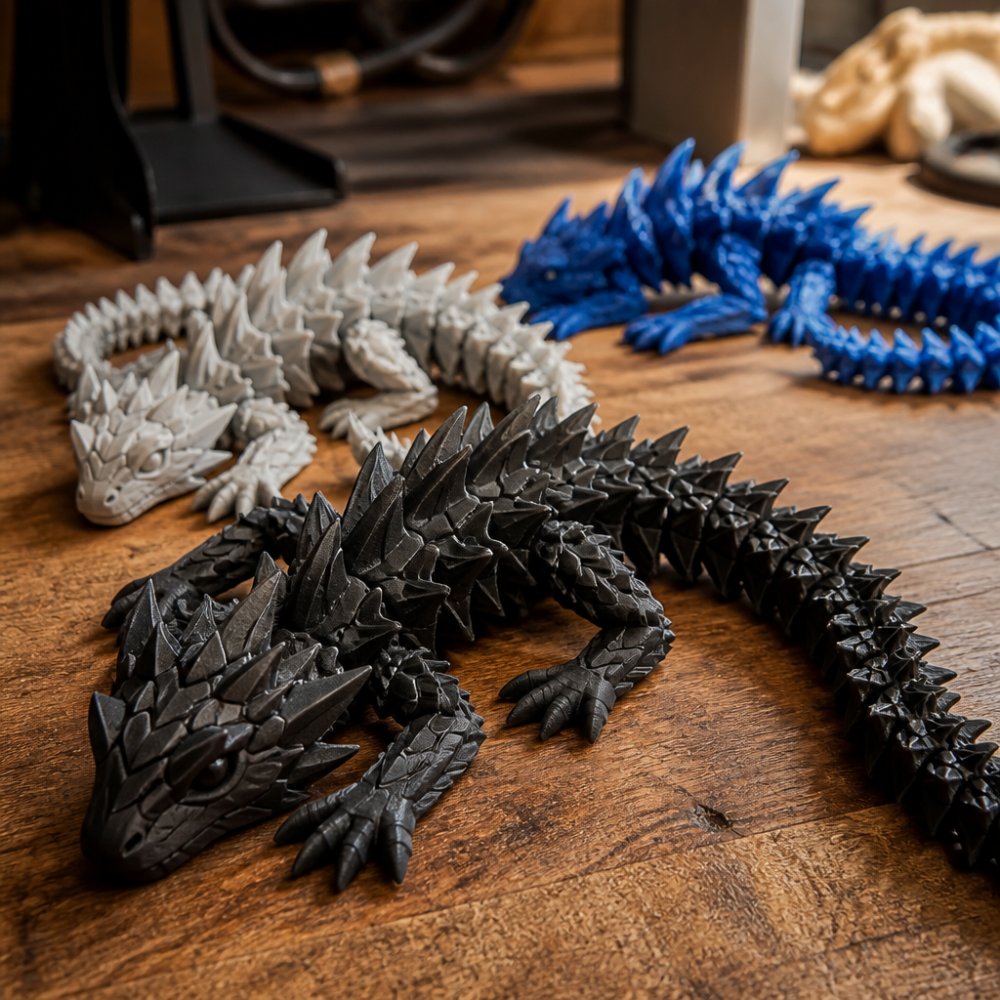
Resin printing takes this further. Resin produces finer detail than filament printing, which is why articulated collectibles and display pieces rely on it. But resin is messier, requires washing and curing stations, and the post-processing labor is significantly higher. When you see a custom print with smooth surfaces and crisp details, you're looking at resin work that demanded careful handling at every stage.
Color coverage and ink consumption matter less in 3D printing than in traditional graphics, but multi-material prints that switch colors mid-print add purge waste and changeover time. Each color transition raises the cost because the machine must flush the previous color before continuing.
3D Printing Post-Processing Labor Costs
Post-processing is where the real labor hours accumulate, and it's the most underestimated part of the pricing equation. When a print finishes, it doesn't come off the bed ready to ship. Supports must be removed, layer lines sanded, and surfaces smoothed.
For articulated figures, each joint must move freely without being loose. That requires careful sanding and testing, joint by joint. A single figure might spend an hour on the workbench after the print completes. This post-processing labor is why two prints of similar size can have very different prices: one might be a solid block that needs five minutes of cleanup, while the other is a 20-piece articulated model that needs individual attention.
Is Custom 3D Printing Worth It?
The answer depends on what you're buying and why, but understanding the psychology behind the premium price reveals why customers consistently choose custom over mass-produced alternatives, even when the cost is significantly higher.
The Psychology of Perceived Value
Custom items command a price premium not just because they cost more to produce, but because they trigger psychological factors that increase perceived value in the buyer's mind. Ownership of something made specifically for you, something that doesn't exist anywhere else, creates a sense of exclusivity and personal investment that a factory-made item cannot replicate.
This is why a custom 3D-printed figurine of your pet, even if it costs $80, feels worth more than a $15 mass-produced toy. The custom piece is a direct expression of your taste, your specifications, and your identity. It's not interchangeable. That uniqueness has real psychological value, which is why customers willingly pay the premium.
Research in consumer behavior shows that personalized products are perceived as higher quality and more valuable than identical mass-produced alternatives, even when the actual material and craftsmanship are comparable. The customization itself becomes part of the product's value proposition.
Cost-to-Value Alignment: When Custom Makes Sense
Custom 3D printing is worth the premium when the use case justifies the investment:
-
Gifts and Keepsakes: A custom figurine of a beloved pet, a personalized desk accessory, or a one-of-a-kind collectible carries emotional value that far exceeds the material cost. The recipient knows it was made specifically for them, which amplifies the perceived thoughtfulness and value of the gift.
-
Functional Prototypes and Specialized Parts: If you need a replacement part that no longer exists, a custom bracket for a unique application, or a prototype to test before manufacturing, the cost of custom 3D printing is justified because the alternative (custom injection molding or CNC machining) would cost 10-50 times more.
-
Branding and Collectibles: Businesses use custom 3D printing to create branded merchandise, limited-edition collectibles, or promotional items that build customer loyalty. The premium price is offset by the marketing value and exclusivity factor.
-
Hobby and Creative Projects: For enthusiasts, makers, and artists, custom 3D printing unlocks creative possibilities that mass production cannot offer. A tabletop gaming miniature customized to your character's exact specifications, or a display piece designed around your aesthetic preferences, justifies the cost because you're paying for creative control.
When Custom Doesn't Make Sense
If you need a generic item in bulk, say, 100 promotional pens for a corporate event, custom 3D printing is not cost-effective. Injection molding or traditional manufacturing will be cheaper per unit once you reach volume thresholds (typically 500+ units). Custom 3D printing shines for small batches and one-off orders, not for high-volume commodity production.
The Real Comparison: Flexibility vs. Unit Cost
Mass production achieves rock-bottom unit costs by sacrificing flexibility. You get one design, one color, one specification, replicated millions of times. Custom 3D printing inverts this trade-off: you pay more per unit to gain total control over design, materials, colors, and specifications.
For a single item or a small batch, custom 3D printing is the only economically viable option. For large quantities, mass production wins on price. The question isn't "Is custom worth it?" but rather "Is the flexibility and uniqueness worth the premium to me?" For most custom orders, the answer is yes, because you're not just buying plastic, you're buying the ability to own something that reflects your exact vision.
Custom vs. Mass-Produced: Understanding the Value Difference
Mass production relies on economies of scale to drive down unit cost. Injection molding, for instance, requires expensive steel molds, but once the mold exists, each additional unit costs pennies. That's why factory toys sell for $10. The mold cost is spread across millions of pieces.
Custom 3D printing inverts that model. There's no mold, no minimum order quantity, and no bulk production requirement. Every order starts fresh, which means setup fees and design labor apply to a single unit. You're paying for flexibility, speed, and uniqueness rather than manufacturing efficiency.
Digital printing and screen printing follow similar logic on flat surfaces, but 3D printing adds the dimension of structural engineering. The trade-off is clear: you sacrifice the rock-bottom pricing of mass production to gain total control over what gets made. For gifts, branding pieces, or collectibles, that control is precisely what makes custom work worth the extra money.
Conclusion
Custom printing costs more because it shifts manufacturing from economies of scale to economies of one. Every design decision, every machine hour, and every minute of post-processing labor applies to your single piece instead of spreading across a production run.
That's the trade-off you accept when you order something made just for you, and it's why the final price reflects far more than the material in your hands. At Bandit's Print Den, we build each piece in our mobile workshop with attention to detail that mass production can't match, and we ship fast so your custom creation arrives ready to display. Whether you're after a desk buddy, a custom NFC keychain to grow your brand, or a one-of-a-kind gift, browse our collection and add a custom print to your cart today.

Frequently Asked Questions
Why are custom prints so expensive compared to mass-produced items?
Custom prints cost more because they skip mass production economies of scale. Each project requires individual setup, file preparation, and quality control. Mass-produced items spread these overhead expenses across thousands of units, lowering per-unit cost. Custom work also prioritizes material quality, precision, and attention to detail, factors that mass production sacrifices for speed and volume.
How do I calculate the actual cost of a custom 3D printing project?
Start with material cost (resin or filament weight × material price per gram), then add machine time (print duration × hourly operating cost). Include post-processing labor (cleaning, curing, assembly, finishing), quality control inspection, and design file preparation if custom modeling is needed. Finally, factor in overhead (equipment maintenance, shipping, packaging).
Does ordering more copies of the same design make it cheaper per unit?
Yes. Bulk orders benefit from economies of scale, setup and design labor are split across multiple units, reducing per-item cost. However, 3D printing (especially resin or FDM) doesn't achieve the dramatic price drops of injection molding until volumes exceed 100+ units. Small batch orders (5-20 copies) see modest savings; single custom pieces carry the full cost burden.
What makes custom 3D printing worth the extra cost?
Custom 3D printing delivers unique, personalized items impossible to find mass-produced. You get exact specifications, high detail quality, and fast turnaround without tooling delays. For collectors, gift-givers, and businesses needing differentiation, the perceived value and uniqueness justify premium pricing. Bandit's Print Den, for example, delivers articulated figures with exceptional detail and fast shipping, qualities mass-produced alternatives rarely match.
This article was written using GrandRanker
0 comments